
The Missing Playbook in Indian Football
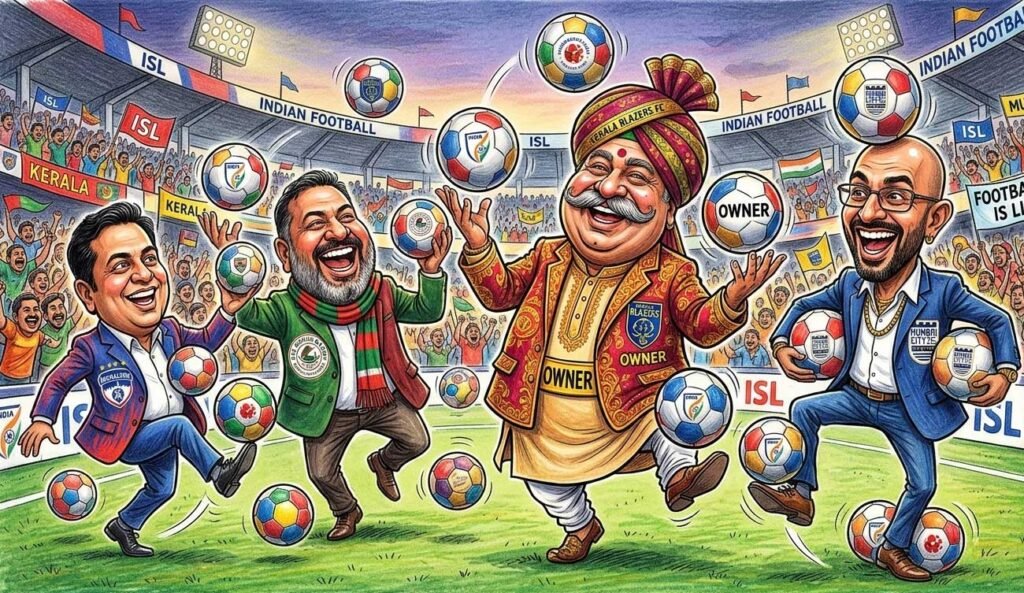
Indian football today stands at a fascinating crossroads. The sport has visibility, growing investment, professional leagues, and an expanding fan base. Yet, despite these positives, the business side of the game hasn’t fully translated into a self-sustaining ecosystem.
A powerful observation captures this gap perfectly:
The biggest challenge for the growth of the football business in India is owners who have the ball but don’t know what to do with it.
In football terms, possession alone doesn’t win matches. It’s what you do with the ball that creates goals. The same principle applies to the business of the sport.
Today, many stakeholders “have the ball.” They hold capital, franchise rights, infrastructure access, and media visibility. But without a coherent long-term playbook, possession risks becoming passive rather than purposeful.
To transform Indian football from a promising project into a resilient industry, the focus must shift from short-term optics to structural value creation.
From Ownership to Stewardship
Across global football markets, successful clubs behave less like event managers and more like institution builders. Their ambition extends beyond match results to culture, community, and continuity.
For Indian football to evolve, ownership must transition into stewardship, where clubs see themselves not just as teams, but as long-term sporting and community assets contributing to the national ecosystem led by bodies like the All India Football Federation.
This shift requires clarity on three foundational pillars.
1. Long-Term Grassroots: Building the Talent Economy
No football economy can outgrow its talent pipeline.
Sustainable clubs invest deeply in academies, youth competitions, scouting networks, and coach education. These investments rarely produce immediate headlines, but they create the competitive and financial backbone of the sport.
When clubs develop players rather than merely acquire them, they generate:
- Sporting identity
- Transfer value
- Local pride
- Long-term cost efficiency
Grassroots is not a CSR activity; it is core business infrastructure.
2. Fan Equity: Turning Spectators into Stakeholders
Football clubs are cultural institutions before they are commercial entities. Revenue follows relevance, and relevance comes from emotional ownership.
Fan equity means nurturing a year-round relationship with supporters through:
- Community programs
- School and grassroots engagement
- Storytelling and digital interaction
- Supporter participation in club identity
When fans feel they belong, matchday attendance becomes predictable, brand value strengthens, and sponsors see deeper engagement rather than just logo exposure.
In mature football markets, fan loyalty is the most defensible competitive advantage a club can have.
3. Commercial Maturity: Beyond the 90 Minutes
Matchday revenue alone cannot sustain modern football operations. Clubs must evolve into diversified entertainment and content brands.
This involves building multiple revenue streams, such as:
- Merchandising ecosystems
- Digital content and media IP
- Data and fan engagement platforms
- Strategic brand partnerships
- Venue utilization beyond matchdays
Commercial maturity is not about aggressive monetisation; it is about designing a business model resilient to on-field volatility.
The Mindset Shift Indian Football Needs
Indian football does not lack passion. It does not lack investors. It does not lack talent.
What it often lacks is alignment between capital and football intelligence, between ambition and execution.
The next phase of growth will depend less on how much money enters the sport and more on how intelligently that money is deployed.
Owners who view clubs as long-term institutions rather than seasonal ventures will define the trajectory of the game.
Conclusion: From Possession to Purpose
Investment is the engine that powers football’s growth.
But vision is the steering wheel that determines direction.
Indian football has reached a moment where simply “having the ball” is no longer enough. The opportunity now is to play with intent to build systems, communities, and businesses that outlast seasons and cycles.
Because in football, as in business,
The teams that win the future are not the ones who hold possession the longest, but the ones who know how to create chances with it.