
AIFF vs Indian Football: How AIFF Is Killing the Game
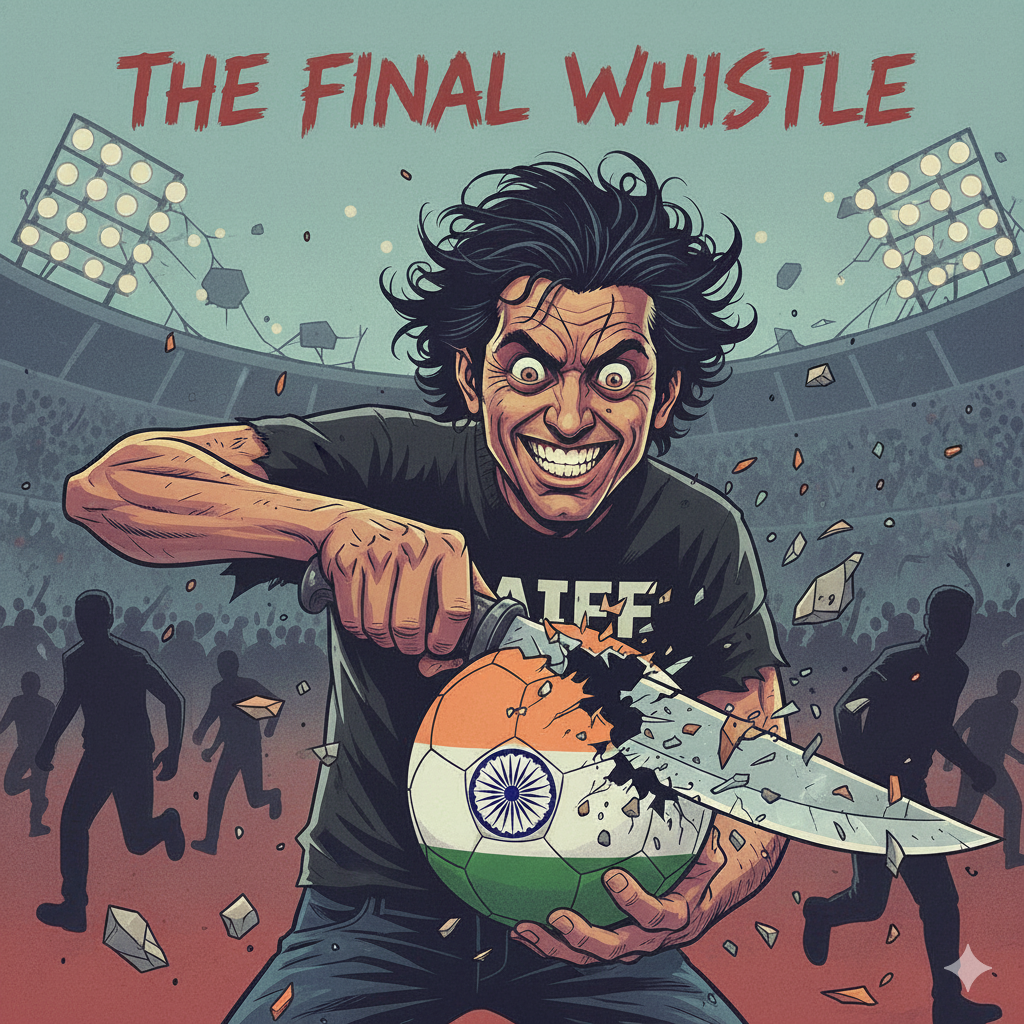
Indian football exists in public consciousness today only because of the Indian Super League (ISL). Before ISL began in 2014, Indian football was invisible, irrelevant, and financially broken. Stadiums were empty, players earned peanuts, and football was treated as a hobby—not a profession.
ISL saved Indian football. Period.
Within a decade:
- ISL became India’s most-watched domestic football league, reaching over 400 million viewers across TV and digital platforms.
- Indian footballers started earning ₹20–50 lakhs per season, with top players crossing ₹1 crore, compared to barely survivable wages earlier.
- Stadium attendance jumped from a few hundred spectators to 20,000–60,000 fans per match in cities like Kochi, Kolkata, Goa, and Bengaluru.
- More than 5,000 private football academies emerged across India, directly inspired by ISL’s visibility and aspiration.
- Indian players trained and played alongside World Cup winners, Champions League players, and elite coaches, raising standards like never before.
This was not done by AIFF.
This was done by clubs, investors, players, and fans.
Yet today, the AIFF is actively destroying ISL, I-League, and Indian football itself.
“Football Is Nothing Without Fans” – Incomplete Truth
Yes, football needs fans.
But the real truth is far more uncomfortable:
Football is nothing without clubs.
Clubs:
- Pay players every month
- Run academies
- Employ coaches, physios, analysts, and staff
- Invest crores in infrastructure
- Take financial risks year after year
Football lovers don’t pay players.
AIFF doesn’t pay players.
Clubs do. True fans give a share by buying tickets to watch the games.
Without clubs, there are:
- No players
- No matches
- No leagues
- No fans
- No football
Europe vs India: Guardians vs Dictators
In Europe:
- Football associations act as regulators, not rulers
- Clubs own the game
- When associations overreach, clubs fight back legally
- Example: European Super League case
- Example: Premier League clubs vs FA
- Associations fear clubs—not the other way around
In India:
- AIFF behaves like a feudal boss
- Decisions are taken by paper clubs that don’t run academies, don’t pay players, and don’t fill stadiums
- Owners of actual professional clubs have little or no voice
- Clubs are expected to obey—even if the decision kills their business
This is not governance.
This is bureaucratic arrogance.
The Ugly Truth: AIFF Has Nothing to Lose
Let’s be brutally honest.
- AIFF gets FIFA grants whether leagues succeed or fail
- AIFF gets government funding, whether players get payment or not
- AIFF officials draw salaries even if football stops
But:
- Clubs earn only if matches happen
- Players survive only if clubs pay them
- Coaches, referees, and staff lose jobs the moment clubs collapse
So when AIFF sabotages ISL or destabilises I-League, they lose nothing.
But Indian football loses everything.
This Is Not Incompetence. This Is Criminal Negligence.
By undermining leagues:
- AIFF destroys player careers
- AIFF shuts down academies
- AIFF scares away investors
- AIFF erases fan trust
- AIFF pushes Indian football back 20 years
All while sitting in offices, issuing circulars, and pretending to “protect football.”
Time for Clubs and Players to Fight Back
Indian clubs must stop behaving like beggars.
Indian players must stop fearing administrators.
Legal challenge is no longer optional. It is necessary.
If European clubs can challenge UEFA,
If players worldwide can unionize,
Why should Indian football accept dictatorship?
Football Teaches One Lesson Above All
Football teaches us to tackle obstacles.
On the field:
- 11 opponents block your path
- Thousands of fans scream against you
- Yet you fight, dribble, tackle, and score
Indian football clubs and players must do the same.
AIFF is now the biggest obstacle to Indian football.
And like every obstacle in football, it must be tackled head-on—for the future of the game.